Strategies to Navigate Ocean Freight Rate Fluctuations and Sea Cargo Surcharges
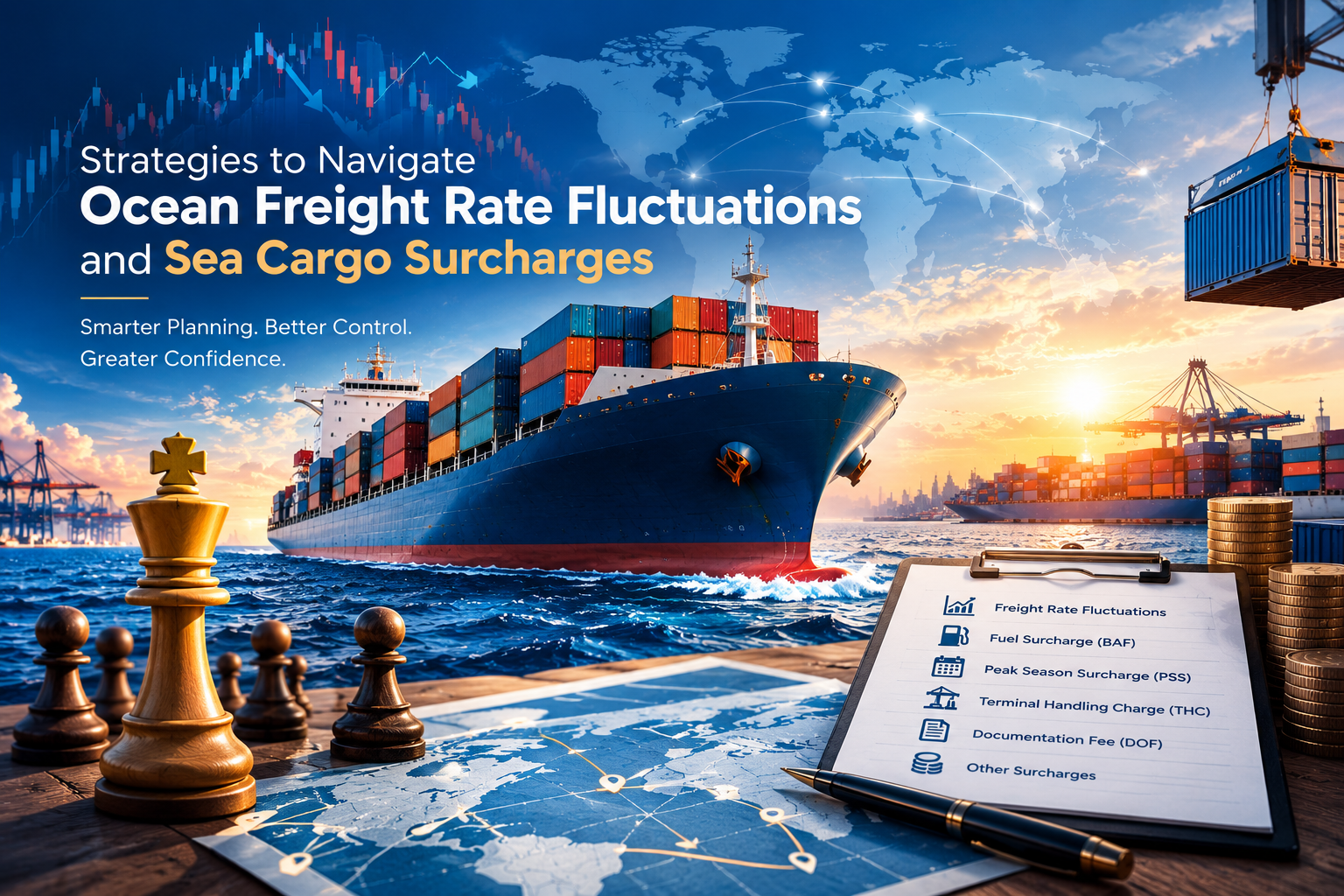
Turning Freight Cost Uncertainty into Smarter Logistics Decisions
Ocean freight remains one of the most effective solutions for international cargo, particularly for large-volume and containerized shipments. However, freight rates can change due to market demand, vessel capacity, fuel costs, port conditions, seasonal peaks, and global supply chain disruptions.
In addition to the basic ocean freight rate, shipments may also be subject to various surcharges and additional logistics costs.
At Naval Cargo, we believe that managing these fluctuations starts with understanding them.
What Drives Ocean Freight Rate Changes?
Ocean freight rates can fluctuate for several reasons, including:
- Changes in global cargo demand
- Vessel and container availability
- Fuel price movements
- Port congestion and operational disruptions
- Seasonal shipping peaks
- Route changes and geopolitical conditions
- Currency movements and destination-related costs
Understanding these factors helps businesses make better decisions when planning international shipments.
Understanding Sea Cargo Surcharges
The final shipping cost may include more than the basic freight rate. Depending on the route, carrier, cargo, and service requirements, additional charges may apply.
These can include fuel-related surcharges, terminal handling charges, documentation fees, peak-season surcharges, congestion-related costs, destination charges, and other carrier or port-related fees.
A clear understanding of these charges is essential for accurate budgeting and avoiding unexpected costs.
Smart Strategies for Better Freight Cost Control
- Plan Shipments Ahead
Early planning provides greater flexibility in selecting sailing schedules, equipment, routes, and freight options.
- Compare the Total Cost — Not Just the Freight Rate
The lowest ocean freight rate does not always mean the lowest overall logistics cost. Consider origin charges, surcharges, handling, documentation, customs, inland transportation, and destination costs.
- Choose the Right Shipping Schedule
Balancing transit time and cost can significantly improve logistics efficiency. Not every shipment requires the fastest available service.
- Consolidate Cargo When Appropriate
For smaller shipments, consolidation may help optimize container utilization and reduce transportation costs.
- Maintain Flexible Logistics Options
Having alternative routes, ports, schedules, and transportation modes can help businesses respond when market conditions change.
The Naval Cargo Approach
At Naval Cargo, we help customers look beyond the headline freight rate.
We consider the complete logistics journey—from pickup and packing to ocean transportation, customs coordination, destination handling, inland delivery, and final destination.
Our goal is to provide greater cost visibility, planning flexibility, and logistics control, helping customers make informed decisions in a constantly changing global freight market.
Smarter Planning. Better Control. Greater Confidence.
Ocean freight rates will continue to move with global market conditions.
The key is not simply to predict every price change.
It is to build a logistics strategy that can adapt to change.
NAVAL CARGO
Export • Import • Freight Forwarding • Logistics • Courier
Navigate Change. Control Costs. Move Beyond Borders.