Indonesia Import Regulations & Taxes: A Practical Guide
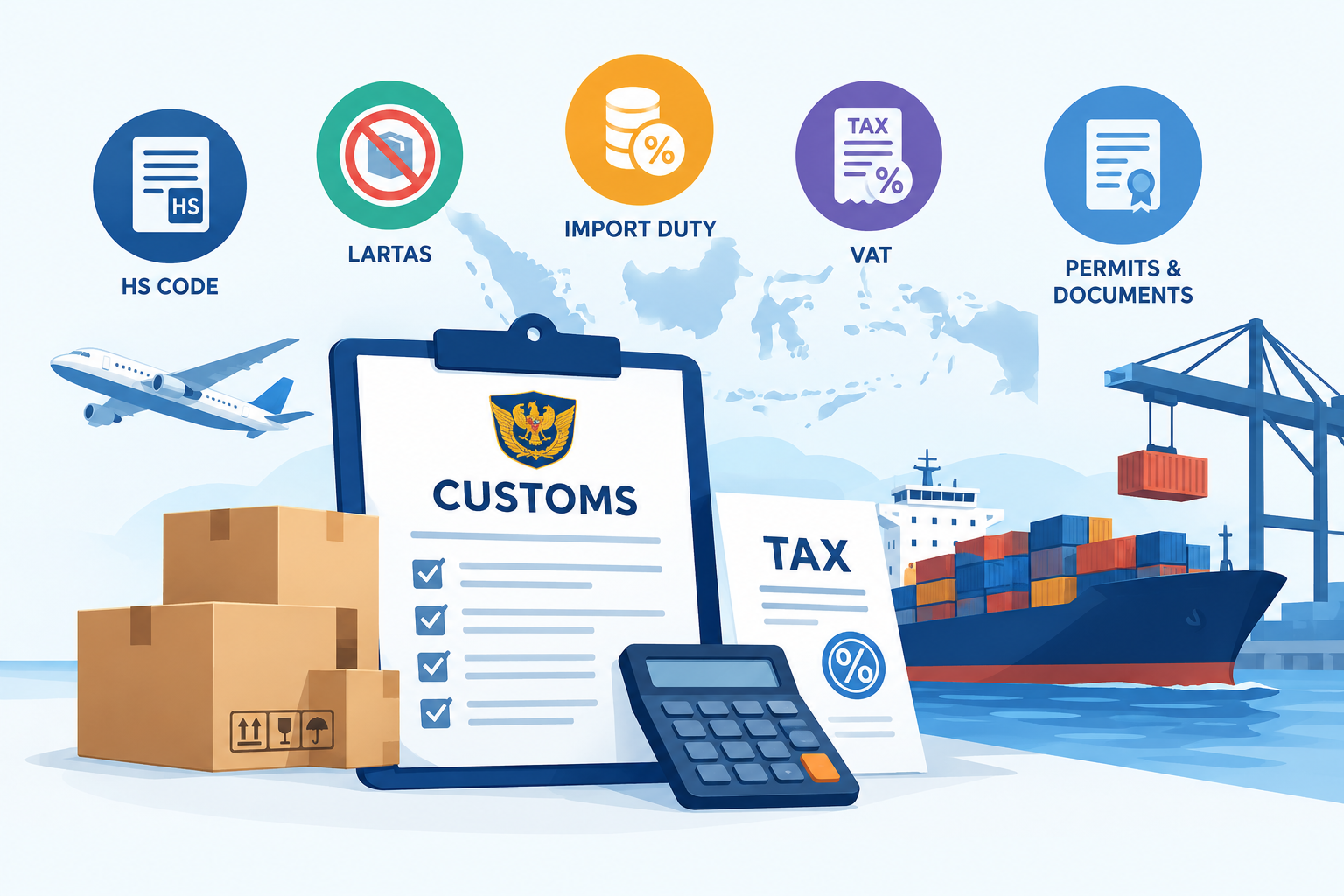
Importing goods into Indonesia involves more than international shipping. Importers need to understand Customs regulations, HS Codes, LARTAS requirements, Import Duty, VAT, and other possible taxes and charges.
Understanding these requirements before shipping can help businesses avoid unexpected costs and customs delays.
1. Customs & Import Requirements
Imported goods entering Indonesia are subject to the regulations of the Directorate General of Customs and Excise (DJBC).
Depending on the type of import, the importer may need to provide:
- Commercial Invoice
- Packing List
- Bill of Lading or Air Waybill
- HS Code
- Certificate of Origin, when applicable
- Import permits or certificates
- Other documents required by Customs or government agencies
The correct documentation is essential for smooth customs clearance.
2. What Is LARTAS?
LARTAS (Larangan dan/atau Pembatasan) refers to goods that are prohibited or restricted for import.
Products such as food, cosmetics, medicines, agricultural products, chemicals, telecommunications equipment, and certain electronic products may require special permits or certificates.
LARTAS requirements should be checked before the shipment is sent, based on the product's HS Code and applicable regulations.
3. Why the HS Code Matters
The HS Code identifies the type of imported product and can determine:
- Import Duty
- LARTAS requirements
- Applicable taxes
- Preferential tariffs under trade agreements
Using the correct HS Code is therefore one of the most important steps in the import process.
4. How Is Import Duty Calculated?
Import Duty is generally calculated from the customs value, commonly based on CIF (Cost + Insurance + Freight).
Formula:
Import Duty = CIF Value × Import Duty Rate
Example
If:
- CIF value = USD 10,000
- Import Duty = 10%
Then:
Import Duty = USD 10,000 × 10% = USD 1,000
The actual calculation is converted into Indonesian Rupiah using the applicable customs exchange rate.
5. Import VAT
Import VAT is calculated based on the applicable Indonesian VAT rules and the relevant import tax base.
For non-luxury taxable goods under the current VAT mechanism, the statutory VAT rate is 12%, with a 11/12 tax-base mechanism resulting in an effective 11% VAT burden.
Because VAT treatment can vary depending on the type and classification of goods, importers should verify the applicable calculation before shipment.
6. Don't Forget Other Import Costs
Import Duty and VAT are not necessarily the only costs.
The total landed cost may include:
Product + Freight + Insurance + Import Duty + VAT + Other Taxes + Customs Clearance + Port Charges + Delivery
Some goods may also be subject to PPh 22, PPnBM, excise, or other applicable charges.
7. Common Import Mistakes
Avoid these common problems:
- Shipping before checking LARTAS
- Using the wrong HS Code
- Calculating taxes only from the invoice value
- Ignoring destination and port charges
- Assuming every product has the same Import Duty
- Failing to prepare required permits
- Checking import regulations only after the cargo arrives
8. Naval Cargo: Your Import Logistics Partner
Naval Cargo helps businesses coordinate international shipments to Indonesia, including:
- International freight
- China–Indonesia shipping
- Port-to-port and door-to-door services
- Import documentation coordination
- Customs clearance coordination
- Cargo consolidation
- Domestic delivery
- Shipment tracking
Import Smart. Calculate Before You Ship.
Before placing an overseas order, always check:
HS Code → LARTAS → Import Duty → VAT & Other Taxes → Documents → Shipping → Final Delivery Cost
Proper preparation helps businesses control costs, reduce delays, and make international importing more predictable.
Naval Cargo — Connecting Global Suppliers with Indonesia.