Hazardous & Dangerous Goods (DG) Handling
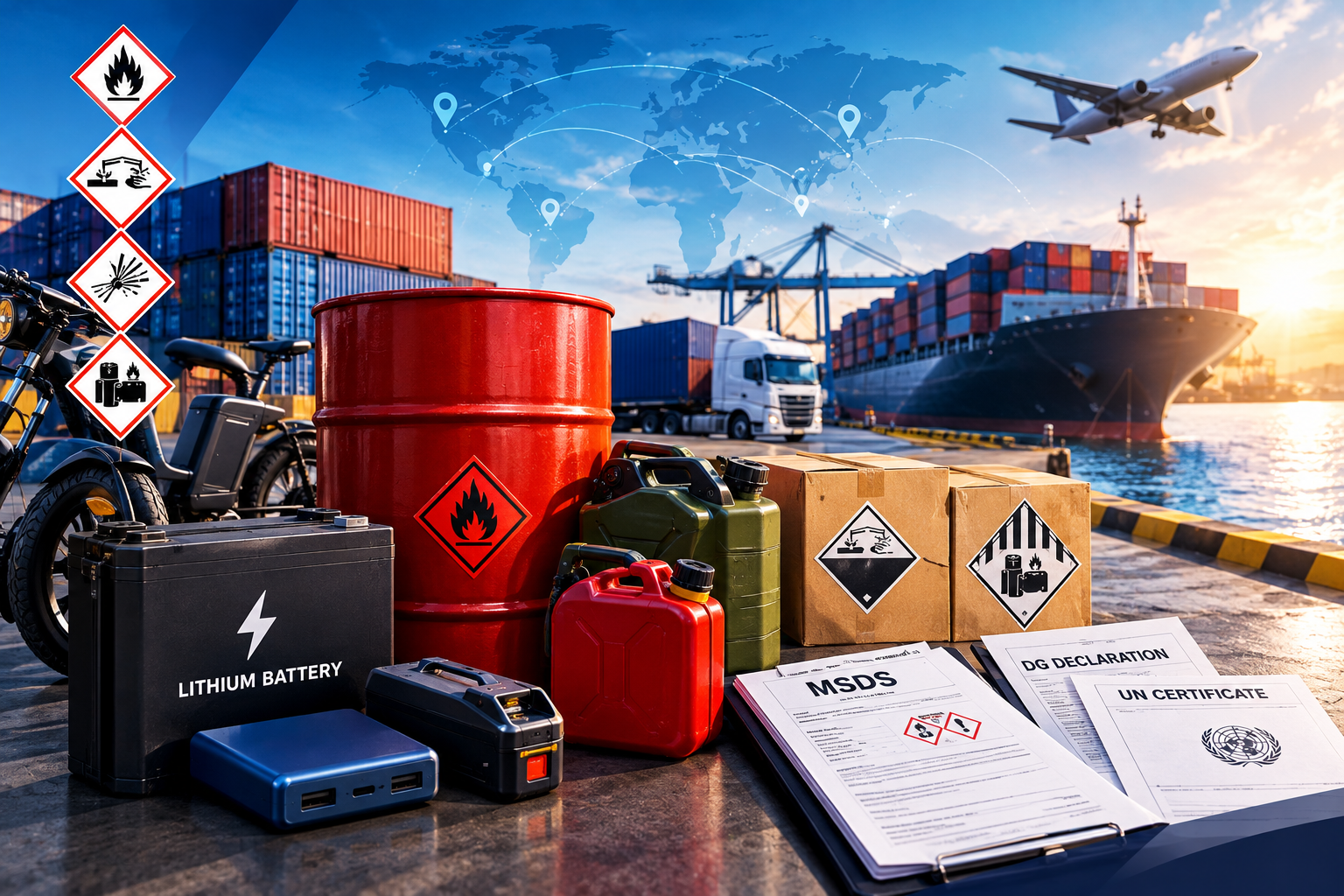
Ship Dangerous Goods Safely, Legally & Without Unnecessary Delays
Shipping batteries, fuel-related equipment, chemicals, or other high-risk cargo requires more than standard shipping documentation. Incorrect declarations or incomplete safety documents can result in cargo delays, rejection, or customs and carrier complications.
Naval Cargo helps shippers and businesses understand and prepare the documentation required for the safe movement of Dangerous Goods (DG).
Lithium Batteries & Electric Vehicles
Lithium batteries used in electric motorcycles, e-bikes, powerbanks, and other devices are subject to specific transport requirements.
Depending on the battery type, capacity, condition, and mode of transport, requirements may include:
- Proper battery classification and identification
- UN number and shipping description
- Approved packaging and labeling
- Battery test documentation
- Dangerous Goods Declaration (where applicable)
- Carrier-specific requirements
Large-capacity batteries require particular attention before booking shipment.
Fuel Tanks & Vehicles
Vehicles and equipment containing fuel or fuel residues may also be subject to Dangerous Goods requirements.
Before transportation, it is important to determine:
- Fuel type and quantity
- Whether the tank is empty or contains residual fuel
- Applicable carrier and transport regulations
- Required safety measures and documentation
Never assume that an empty tank automatically means unrestricted transport.
MSDS / SDS & DG Documentation
For many dangerous or potentially hazardous products, a Safety Data Sheet (SDS), formerly commonly called MSDS, is an essential starting point for determining the cargo classification and handling requirements.
Depending on the shipment, additional documents may include:
- SDS / MSDS
- DG Declaration
- UN packaging certification
- Battery test summary
- Packing certificate
- Other carrier or customs documentation
Naval Cargo — Safe Cargo Starts with Correct Information
Before your cargo moves, make sure its classification, packaging, labeling, and documentation are properly reviewed.
Whether you are an individual shipper, an e-bike owner, or an SME exporter, Naval Cargo can assist with Dangerous Goods logistics and documentation requirements.
Declare it correctly. Document it properly. Ship it safely.
NAVAL CARGO
Dangerous Goods & International Logistics
Safe handling. Proper documentation. Reliable transportation.