Air Freight vs Sea Freight How to Choose the Right Shipping Solution for Your Business
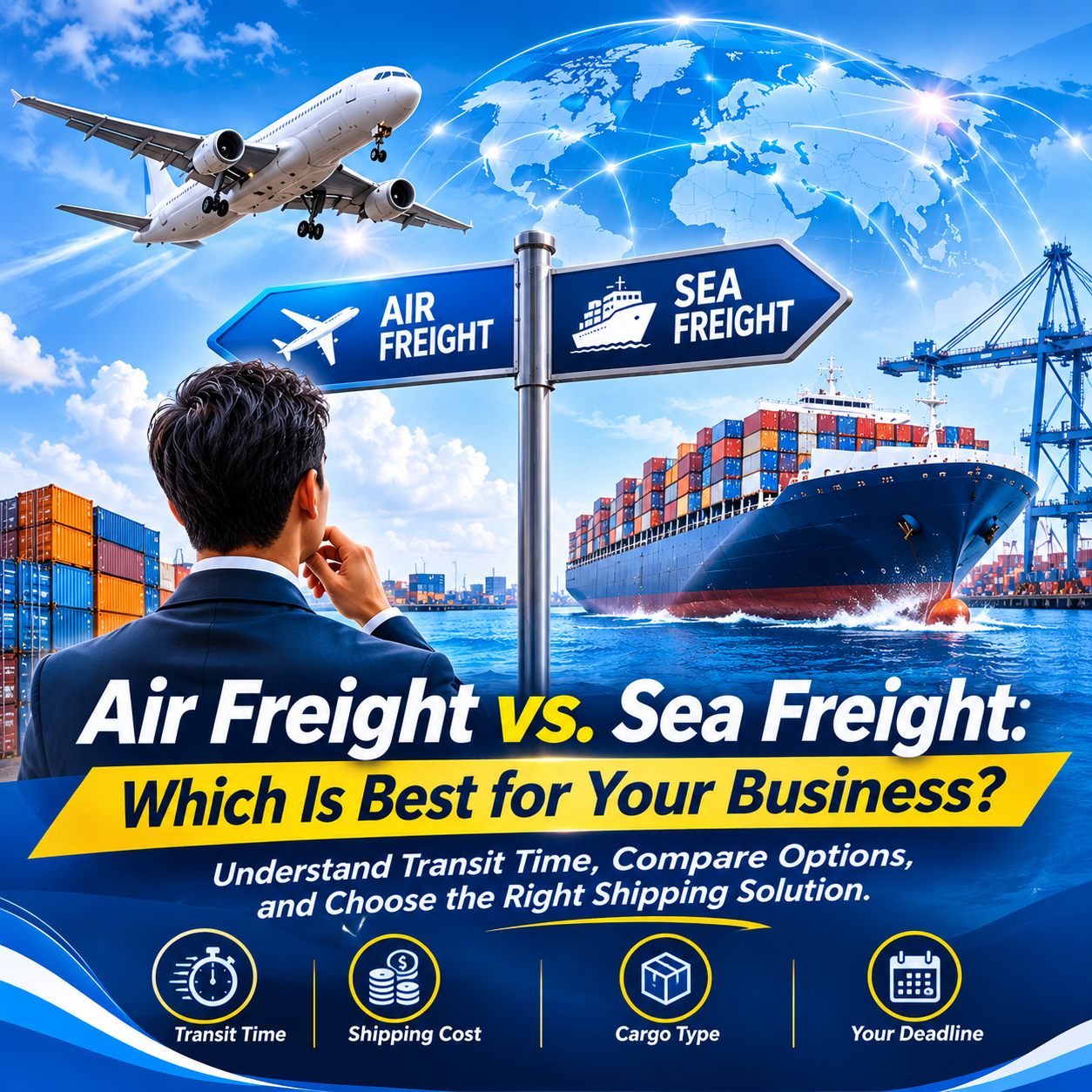
Choosing the Right Shipping Method Is More Than Just Speed or Cost
In today's global business environment, choosing the right shipping method is an important decision that can directly affect your business operations, inventory management, and customer satisfaction.
Whether you are importing goods, exporting products, or managing international cargo shipments, two of the most common transportation options are Air Freight and Sea Freight.
But which one is right for your business?
The answer depends on your delivery deadlines, cargo characteristics, shipment volume, budget, and overall business priorities.
At NAVAL CARGO – International Freight Forwarders and Relocations, we believe that successful shipping is not simply about moving cargo from one destination to another. It is about choosing the right logistics strategy to keep your business moving.
- Air Freight: When Time Matters Most
Air freight is one of the most suitable options for businesses that require faster transportation and more predictable delivery planning.
By using commercial or dedicated cargo aircraft, goods can travel between international destinations much faster than conventional sea transportation.
Why Choose Air Freight?
- Faster international transportation.
- Suitable for urgent and time-sensitive shipments.
- Ideal for high-value and lightweight products.
- Helpful for maintaining business inventory.
- Suitable for samples, electronics, spare parts, and urgent commercial goods.
Air freight is particularly useful when your business cannot afford long waiting periods or when products must arrive within a specific operational timeframe.
However, air freight costs are generally higher, particularly for heavy or bulky shipments.
- Sea Freight: A Practical Solution for Larger Shipments
For businesses handling large volumes of goods, sea freight can provide a more economical transportation solution.
Cargo is transported through international shipping routes using container vessels and other maritime transportation services.
Why Choose Sea Freight?
- More economical for many large-volume shipments.
- Suitable for heavy and bulky cargo.
- Ideal for commercial stock replenishment.
- Flexible container options, depending on cargo requirements.
- Practical for businesses planning shipments in advance.
Sea freight is commonly used for machinery, furniture, construction materials, industrial products, and large commercial shipments.
The main consideration is transit time. Sea transportation generally takes longer, and businesses should prepare their inventory and delivery schedules accordingly.
- Understanding Transit Time: Plan Beyond the Departure Date
One common mistake in international shipping is calculating delivery time only from the vessel or aircraft departure date.
In reality, the overall shipping process involves several stages:
- Supplier preparation and cargo readiness.
- Export documentation and customs procedures.
- Cargo handling and warehouse processing.
- Departure and international transportation.
- Arrival handling and import customs clearance.
- Final delivery to the consignee.
Each stage may affect the total delivery time.
Transit time can also vary depending on the origin, destination, shipping route, carrier schedule, customs requirements, weather conditions, and operational circumstances.
That is why businesses should always plan using realistic delivery estimates rather than relying solely on advertised transportation times.
- Air Freight vs. Sea Freight: Which One Is Better?
|
Business Requirements |
Air Freight |
Sea Freight |
|
Urgent shipments |
Recommended |
Less suitable |
|
Large-volume cargo |
Depends on cost |
Recommended |
|
High-value lightweight goods |
Often suitable |
Depends on requirements |
|
Heavy and bulky goods |
Can be expensive |
Often economical |
|
Inventory replenishment |
Shorter transit |
Requires advance planning |
|
Transportation cost |
Generally higher |
Generally lower per unit for large shipments |
There is no single shipping method that is best for every business.
The smartest decision is to match the transportation method with your business priorities.
- Five Important Things to Consider Before Shipping Internationally
Before choosing your shipping method, consider these five factors:
- Delivery Deadline
When does your business actually need the cargo? Consider your stock availability and customer delivery commitments.
- Cargo Volume and Weight
The dimensions, gross weight, and chargeable weight of your cargo can influence transportation costs.
- Shipping Budget
Compare the total logistics cost, not just the basic freight rate. Consider handling, documentation, customs, and destination charges where applicable.
- Customs and Documentation
Proper documentation is essential for a smoother international shipping process. Incomplete or inaccurate documents may cause additional inspections or delays.
- Cargo Characteristics
Different products have different handling, packaging, safety, and regulatory requirements. Always check the applicable shipping regulations before dispatch.
- Why Choose NAVAL CARGO?
At NAVAL CARGO, we understand that every shipment represents more than just cargo. It represents your business investment, operational schedule, and customer commitments.
Our approach focuses on helping customers understand their shipping options and make practical decisions based on their actual requirements.
We focus on:
- International freight forwarding solutions.
- Air freight and sea freight planning.
- Import and export shipment coordination.
- Shipping documentation assistance.
- Cargo handling and relocation coordination.
- Professional communication and customer support.
Our goal is to help businesses plan their shipments more effectively, manage logistics expectations, and make informed transportation decisions.
- Smart Shipping Starts with the Right Planning
Choosing between air freight and sea freight should never be based on price or speed alone.
A shipment that arrives too late can disrupt your inventory. Meanwhile, choosing a more expensive transportation method when it is not necessary can increase your operating costs.
The right logistics strategy balances time, cost, cargo requirements, and business priorities.
Remember: The best shipping solution is the one that meets your business needs.
Let NAVAL CARGO help you explore the right shipping options for your next international shipment.