Door to Door vs Port to Port Shipping Which Is More Cost Effective for SMEs
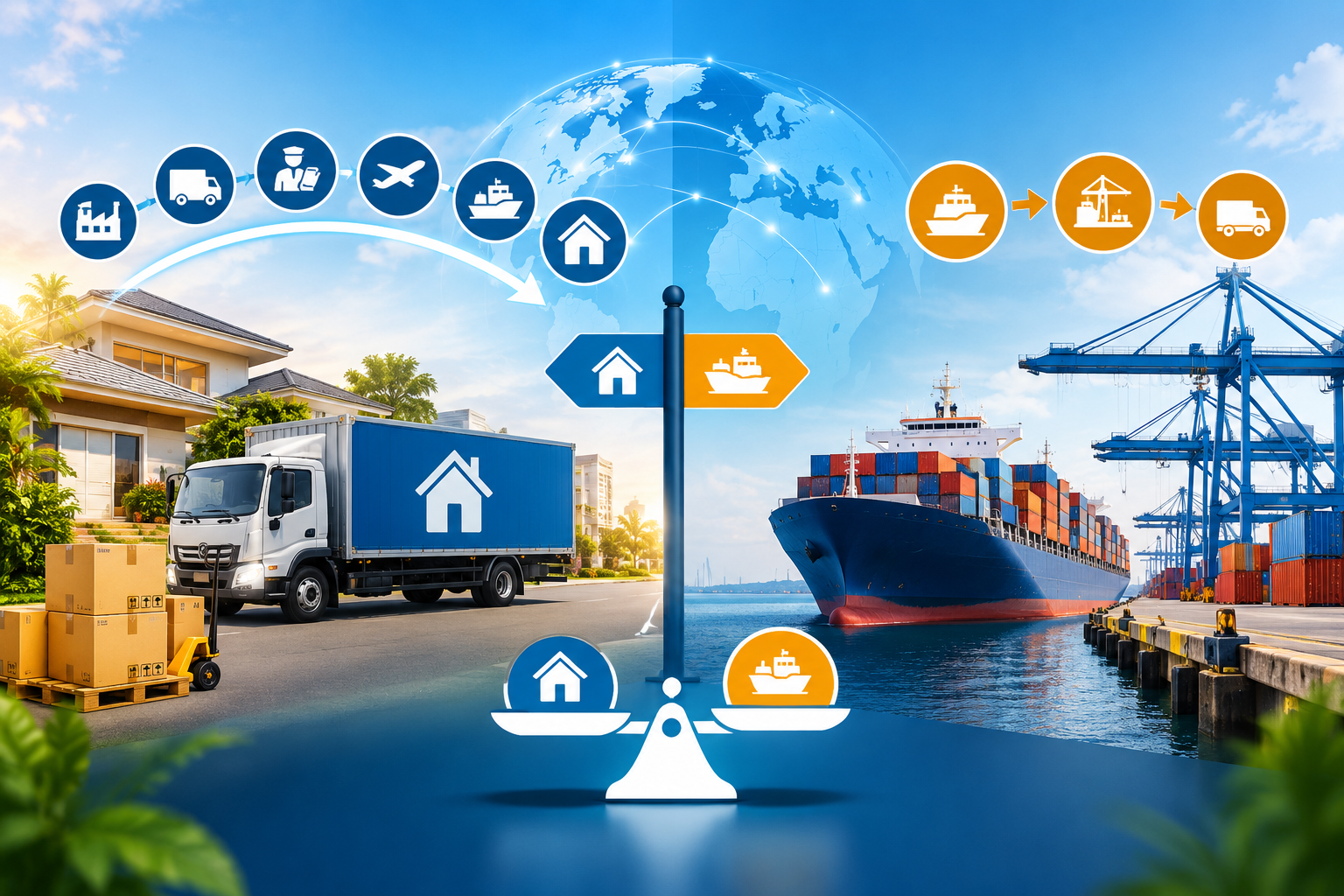
For small and medium-sized businesses (SMEs), choosing the right shipping method can have a significant impact on logistics costs, delivery speed, and operational efficiency.
Two of the most common international shipping options are Door-to-Door and Port-to-Port shipping. Both offer different levels of service, responsibility, and cost.
So, which one is better for your business?
The answer depends on your shipment volume, destination, logistics experience, and how much control you want over the transportation process.
What Is Door-to-Door Shipping?
Door-to-Door shipping is a comprehensive logistics service where the cargo is collected from the seller's location and delivered directly to the buyer's specified address.
Depending on the service agreement and Incoterm, the logistics provider may coordinate several stages of transportation, including:
- Pickup from the supplier or warehouse
- Export transportation
- Export customs clearance
- International transportation
- Import procedures
- Transportation from the destination port
- Final-mile delivery to the recipient
For SMEs, Door-to-Door shipping can simplify international trade because the business does not need to coordinate every transportation stage separately.
Advantages of Door-to-Door Shipping
- More convenient
The logistics provider manages most transportation stages, allowing business owners to focus on sales, production, and customers.
- Easier cost planning
When the service includes multiple logistics components, businesses can estimate their total logistics budget more easily.
- Suitable for businesses with limited logistics experience
SMEs that are new to importing or exporting may benefit from having a logistics partner coordinate the process.
- Less operational coordination
Instead of communicating with several transportation providers, the business can work primarily with one logistics partner.
Disadvantages of Door-to-Door Shipping
- The initial quoted price may appear higher
The price may include several services that would otherwise need to be arranged separately.
- Less control over individual logistics stages
The business may have less flexibility to select separate providers for transportation, customs handling, or last-mile delivery.
- The final cost depends on the service scope
Businesses should carefully check whether customs duties, taxes, destination charges, handling fees, storage, and other charges are included.
What Is Port-to-Port Shipping?
Port-to-Port shipping generally means that the carrier transports the cargo from the origin port to the destination port.
The shipper and consignee are responsible for arranging other logistics stages outside the main international transportation.
For example:
Supplier → Origin Port → Ocean Freight → Destination Port → Consignee
The business may need to arrange:
- Pickup from the supplier
- Transportation to the origin port
- Export documentation and customs clearance
- Import customs clearance
- Destination port handling
- Transportation from the destination port to the warehouse
Port-to-Port shipping can provide greater control, but it also requires more logistics coordination.
Advantages of Port-to-Port Shipping
- Potentially lower transportation costs
If the business can efficiently manage transportation before and after the ports, Port-to-Port shipping may reduce the overall logistics cost.
- Greater flexibility
The importer or exporter can select different providers for trucking, customs clearance, warehousing, and final delivery.
- Suitable for experienced businesses
Companies with established logistics teams or reliable local partners may prefer this model because they can manage individual logistics components themselves.
Disadvantages of Port-to-Port Shipping
- More coordination is required
The business may need to manage multiple service providers.
- Additional charges can arise
Port handling, documentation, storage, demurrage, detention, customs clearance, trucking, and other destination charges can significantly affect the final cost.
- Greater responsibility for the shipper or consignee
Businesses need to understand their obligations under the applicable Incoterm and shipping agreement.
Door-to-Door vs. Port-to-Port: Key Differences
|
Factor |
Door-to-Door |
Port-to-Port |
|
Convenience |
High |
Lower |
|
Logistics coordination |
Mostly handled by logistics provider |
Mostly handled by shipper/consignee |
|
Cost visibility |
Generally easier to estimate |
Requires calculation of multiple charges |
|
Flexibility |
Moderate |
High |
|
Control |
Lower |
Higher |
|
Suitable for beginners |
Yes |
More suitable for experienced businesses |
|
Potential basic freight cost |
May be higher |
May be lower |
|
Risk of unexpected local charges |
Depends on quotation and scope |
Can be higher if charges are overlooked |
Important: The cheapest freight rate does not always mean the lowest total logistics cost.
Which Option Is More Economical for SMEs?
For many SMEs, the most economical option should be evaluated based on Total Landed Cost, rather than simply comparing the ocean freight rate.
For example:
Port-to-Port
Ocean freight: $500
Origin charges: $150
Destination charges: $250
Customs clearance: $100
Trucking: $150
Estimated logistics total: $1,150
Door-to-Door
Door-to-Door service: $1,050
In this example, the Door-to-Door option is actually more economical, even though its initial quotation may appear higher than the Port-to-Port freight rate.
This is why SMEs should compare all applicable costs from origin to final destination.
What Should SMEs Consider Before Choosing?
Before selecting a shipping method, consider these factors:
- Shipment Volume
Small or occasional shipments may benefit from a simplified logistics solution.
Larger and regular shipments may justify a more customized logistics arrangement.
- Destination
Shipping to major logistics hubs may be relatively straightforward, while remote destinations can involve additional trucking and handling costs.
- Logistics Experience
If your business does not have an internal logistics team, Door-to-Door services can reduce administrative complexity.
- Customs Knowledge
International shipments involve documentation and customs requirements. Make sure you understand who is responsible for customs clearance and duties.
- Incoterms
The applicable Incoterm determines important responsibilities between buyer and seller, including transportation, risk, and certain costs.
Always confirm the exact Incoterm and named place before accepting a quotation.
- Hidden or Additional Charges
Ask your logistics provider whether the quotation includes:
- Origin charges
- Destination charges
- Customs clearance
- Documentation fees
- Port handling
- Delivery charges
- Storage
- Demurrage
- Detention
- Taxes and duties
A clear quotation helps prevent unexpected logistics expenses.
Door-to-Door or Port-to-Port: Which One Should Your SME Choose?
There is no universal answer.
Door-to-Door may be more suitable if:
- You want a simple logistics process.
- You have limited international shipping experience.
- You do not have an internal logistics team.
- You want delivery coordinated to your warehouse or business address.
- You prefer one logistics partner to manage multiple stages.
Port-to-Port may be more suitable if:
- You have an experienced logistics team.
- You already have reliable trucking and customs partners.
- You want greater control over each logistics stage.
- You regularly import or export larger volumes.
- You can manage destination charges efficiently.
The Smart Approach: Compare Total Cost, Not Just Freight Rates
For SMEs, the right question is not:
"Which shipping rate is cheaper?"
The better question is:
"What will be my total cost from the supplier's location to my warehouse?"
A professional logistics comparison should consider the entire supply chain, including transportation, customs, port charges, handling, storage, and final delivery.
At Naval Cargo, we help businesses evaluate their shipping requirements and understand the logistics process from origin to destination.
Whether you are importing from China, Hong Kong, or other international markets, selecting the right shipping model can help your business control costs and simplify operations.
Naval Cargo — Your Logistics Partner from Origin to Destination.
Contact Naval Cargo to discuss your shipment requirements and find a logistics solution that fits your business.